Tesco Enterprise
Creative direction
Design systems
Leadership
Product design
Transforming the way Britain’s largest retailler runs its commercial business.
Between 2018 and 2021, and again from 2022 to 2026, I was part of the team revolutionising how Tesco operates. I was part of the enterprise design leadership team, led the design system and provided creative direction for 45 applications and support for a wider team of 50 designers.
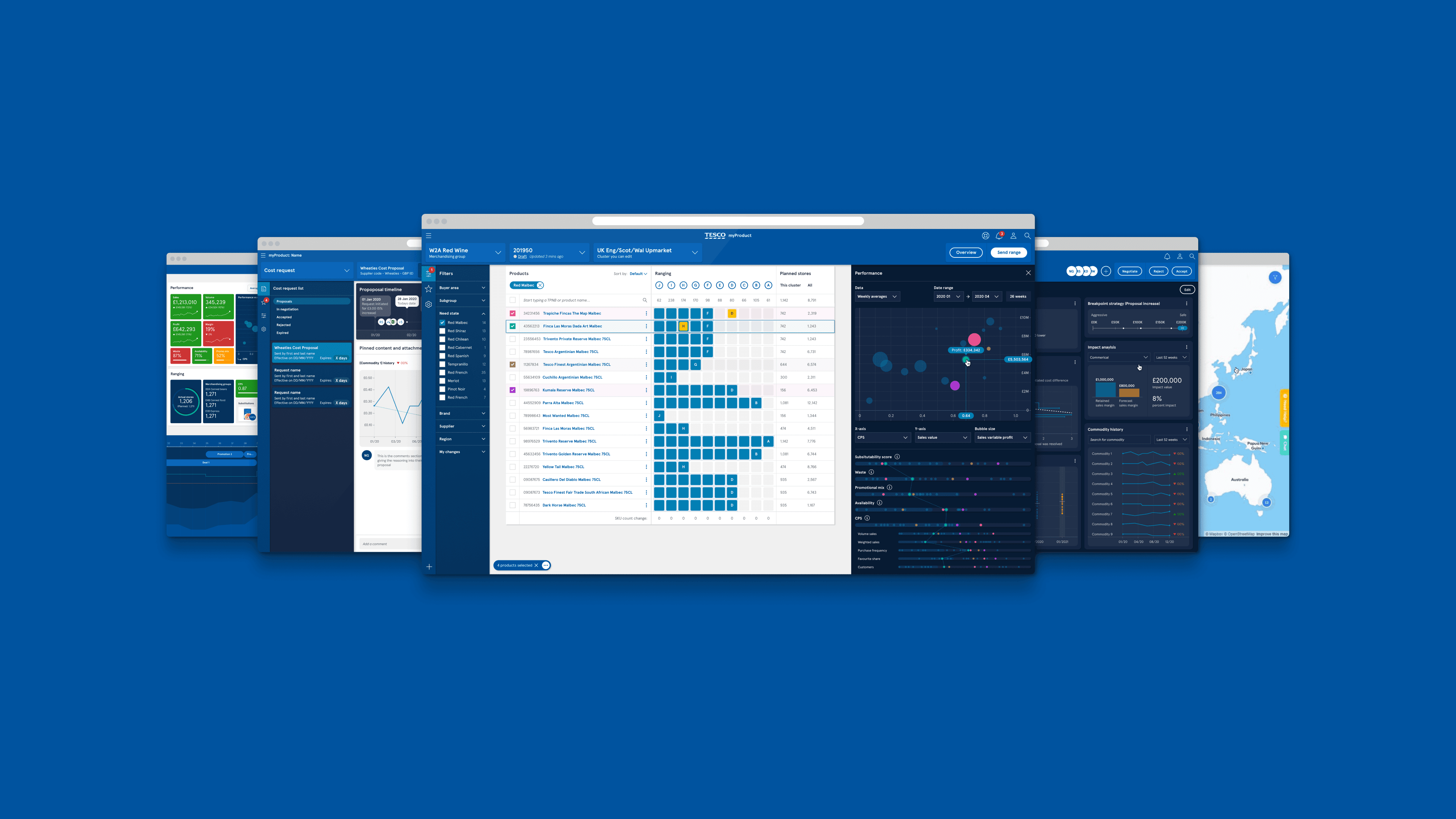
My core role involved overseeing a suite of 15 enterprise tools for colleagues and suppliers called myProduct. The tools cover the buying, selling, monitoring and development products across Tesco.
Between 2018 and 2021, and again from 2022 to 2026, I was part of the team revolutionising how Tesco operates. I was part of the enterprise design leadership team, led the design system and provided creative direction for 45 applications and support for a wider team of 50 designers.
My core role involved overseeing a suite of 15 enterprise tools for colleagues and suppliers called myProduct. The tools cover the buying, selling, monitoring and development products across Tesco.
Between 2018 and 2021, and again from 2022 to 2026, I was part of the team revolutionising how Tesco operates. I was part of the enterprise design leadership team, led the design system and provided creative direction for 45 applications and support for a wider team of 50 designers.
My core role involved overseeing a suite of 15 enterprise tools for colleagues and suppliers called myProduct. The tools cover the buying, selling, monitoring and development products across Tesco.


•
The myProduct suite of enterprise tools
I helped to develop the creative vision for the applications, moving them from execution-based to analytical decision-making tools, and I created a new visual language to achieve this.
I oversaw the rollout across different applications, collaborating with designers, product owners, and engineers to create, develop and document a new flexible design system. As my role expanded, I took creative oversight of all UI output, leading and mentoring the UI designers. I forming a dedicated team to share ideas, work together on design challenges, driving consistency and raising quality. I also instigated and managed the migration our team to Figma, enabling greater collboration and visibility of our design system.
I helped to develop the creative vision for the applications, moving them from execution-based to analytical decision-making tools, and I created a new visual language to achieve this.
I oversaw the rollout across different applications, collaborating with designers, product owners, and engineers to create, develop and document a new flexible design system. As my role expanded, I took creative oversight of all UI output, leading and mentoring the UI designers. I forming a dedicated team to share ideas, work together on design challenges, driving consistency and raising quality. I also instigated and managed the migration our team to Figma, enabling greater collboration and visibility of our design system.
I helped to develop the creative vision for the applications, moving them from execution-based to analytical decision-making tools, and I created a new visual language to achieve this.
I oversaw the rollout across different applications, collaborating with designers, product owners, and engineers to create, develop and document a new flexible design system. As my role expanded, I took creative oversight of all UI output, leading and mentoring the UI designers. I forming a dedicated team to share ideas, work together on design challenges, driving consistency and raising quality. I also instigated and managed the migration our team to Figma, enabling greater collboration and visibility of our design system.


•
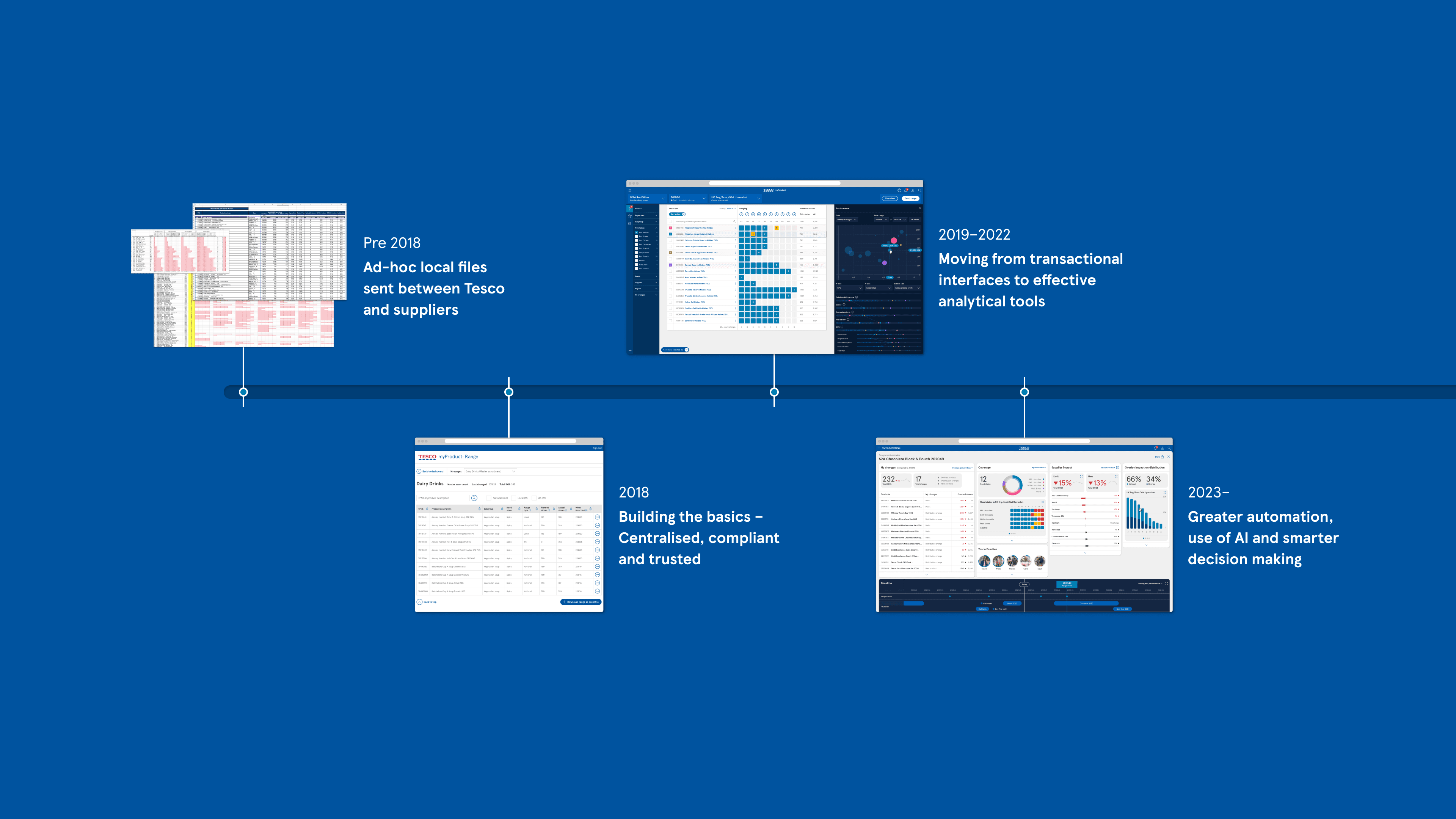
Timeline of how we transformed the commercial product area
How it started
How it started
How it started
In 2018, I became one of the first designers to work in Tesco’s Commercial Product area on enterprise tools for colleagues and suppliers. In the wake of some accounting scandals in the years before, the initial aim was to centralise data and processes, creating single sources of truth for information, which were otherwise lost in a sea of spreadsheets and emails.
The first tools were transactional – they allowed different users to enter data and see everything in one place, but analysis and decision-making continued elsewhere.
In 2018, I became one of the first designers to work in Tesco’s Commercial Product area on enterprise tools for colleagues and suppliers. In the wake of some accounting scandals in the years before, the initial aim was to centralise data and processes, creating single sources of truth for information, which were otherwise lost in a sea of spreadsheets and emails.
The first tools were transactional – they allowed different users to enter data and see everything in one place, but analysis and decision-making continued elsewhere.
In 2018, I became one of the first designers to work in Tesco’s Commercial Product area on enterprise tools for colleagues and suppliers. In the wake of some accounting scandals in the years before, the initial aim was to centralise data and processes, creating single sources of truth for information, which were otherwise lost in a sea of spreadsheets and emails.
The first tools were transactional – they allowed different users to enter data and see everything in one place, but analysis and decision-making continued elsewhere.


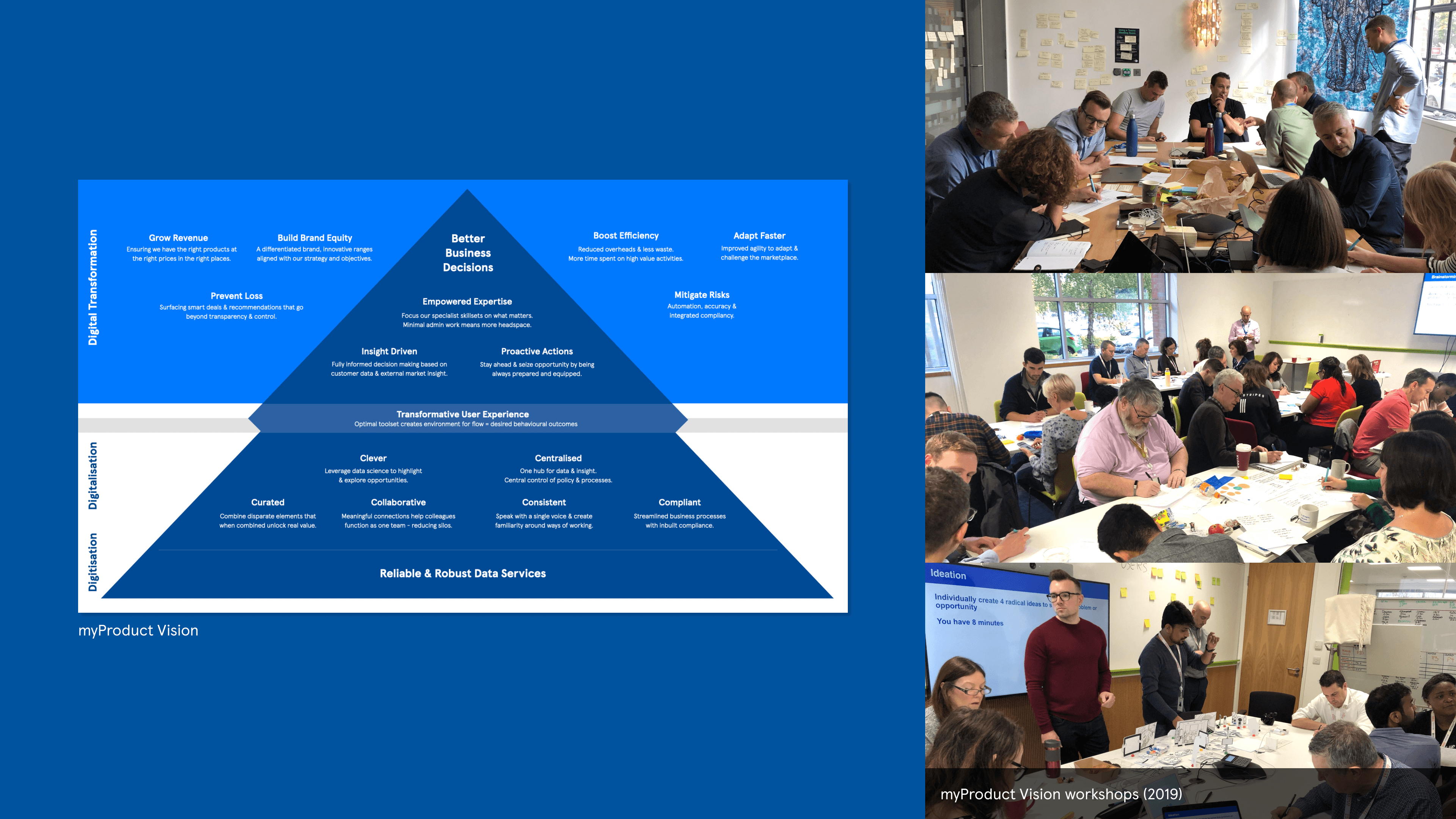
By 2019, I worked with the product leadership team to create a new vision suite of tools. Our goal was to bring data analysis and smart recommendations into the heart of myProduct, empowering colleagues to make better business decisions.


•
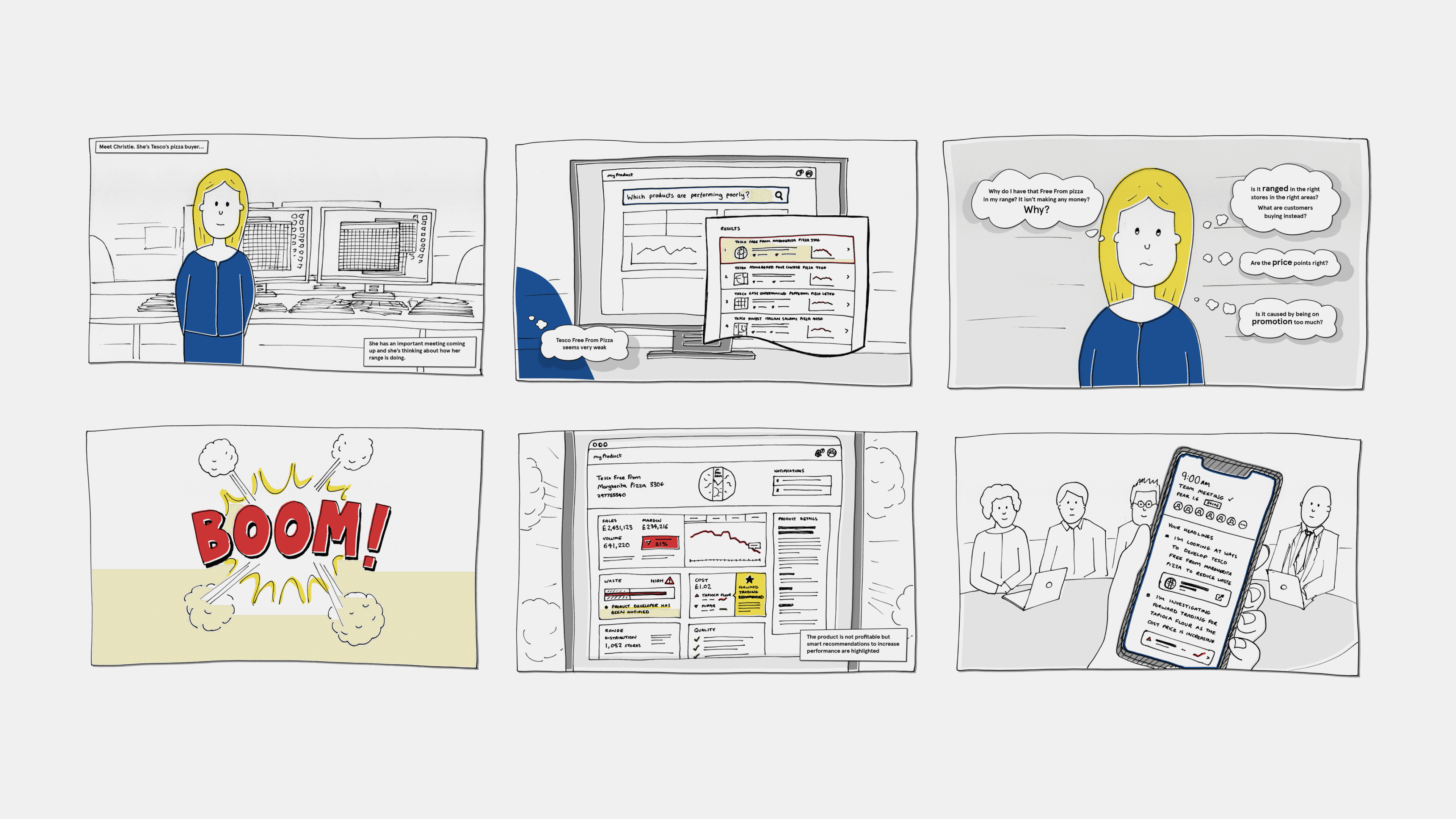
An early example of how we used storytelling to get buy-in for the vision
At that point, the tools were disconnected, forcing users to gather data from multiple places. For example a buyer would need to access different applications to try to see how a product was performance and why. We proposed a unified dashboard where buyers could access real-time insights, analysis, and suggested actions.
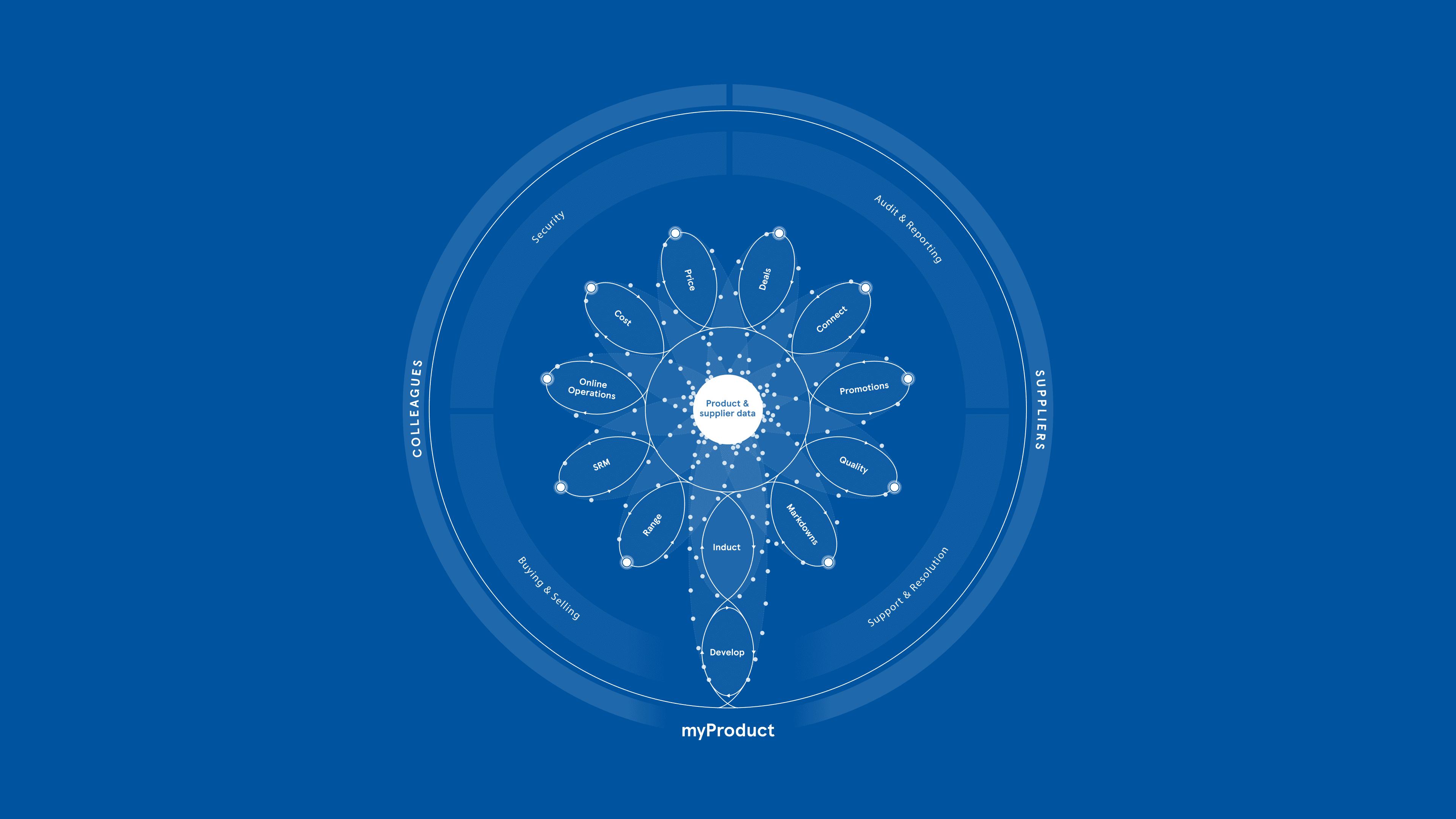
We created a product model illustrating how applications should connect, surfacing relevant data at key decision points in the product lifecycle.
At that point, the tools were disconnected, forcing users to gather data from multiple places. For example a buyer would need to access different applications to try to see how a product was performance and why. We proposed a unified dashboard where buyers could access real-time insights, analysis, and suggested actions.
We created a product model illustrating how applications should connect, surfacing relevant data at key decision points in the product lifecycle.
At that point, the tools were disconnected, forcing users to gather data from multiple places. For example a buyer would need to access different applications to try to see how a product was performance and why. We proposed a unified dashboard where buyers could access real-time insights, analysis, and suggested actions.
We created a product model illustrating how applications should connect, surfacing relevant data at key decision points in the product lifecycle.


•
Product model
The design system
The design system
The design system
To realise this vision we needed a new UX and UI approach. The existing design system at Tesco was designed for simpler customer-facing interfaces and at the time was incredibly inflexible and it wasn’t possible to make changes or contribute new components or variants., was too rigid for our complex needs.
I created Daisy, iniitially standing for the Data Analysis Interface System. It would allow us to design elegant web applications which could cater for complex user flows with the ability for users to compare and analyse several data points at once. The name and mark took inspiration from the ‘flower’ product model diagram we had created.
To realise this vision we needed a new UX and UI approach. The existing design system at Tesco was designed for simpler customer-facing interfaces and at the time was incredibly inflexible and it wasn’t possible to make changes or contribute new components or variants., was too rigid for our complex needs.
I created Daisy, iniitially standing for the Data Analysis Interface System. It would allow us to design elegant web applications which could cater for complex user flows with the ability for users to compare and analyse several data points at once. The name and mark took inspiration from the ‘flower’ product model diagram we had created.
To realise this vision we needed a new UX and UI approach. The existing design system at Tesco was designed for simpler customer-facing interfaces and at the time was incredibly inflexible and it wasn’t possible to make changes or contribute new components or variants., was too rigid for our complex needs.
I created Daisy, iniitially standing for the Data Analysis Interface System. It would allow us to design elegant web applications which could cater for complex user flows with the ability for users to compare and analyse several data points at once. The name and mark took inspiration from the ‘flower’ product model diagram we had created.


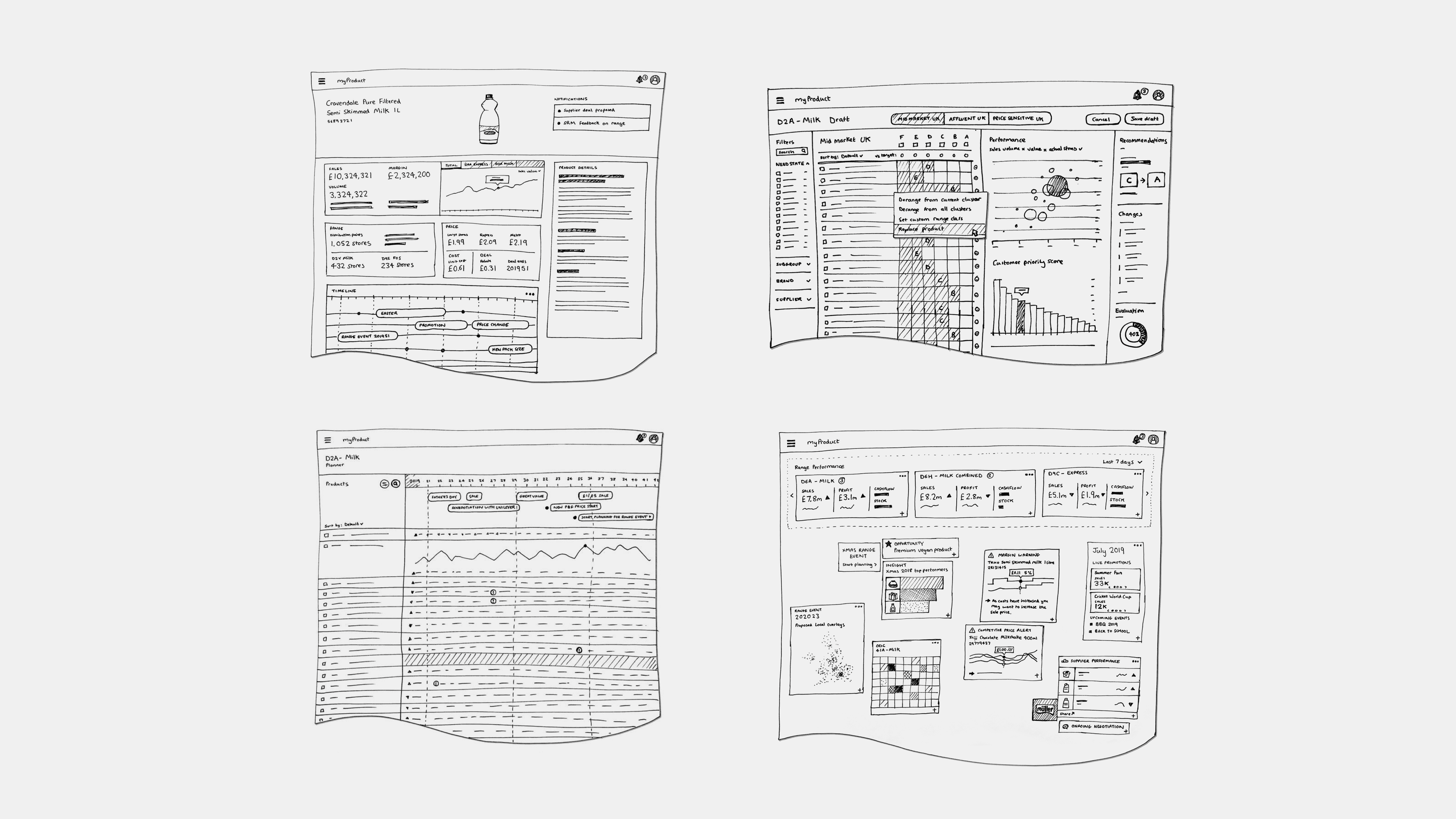
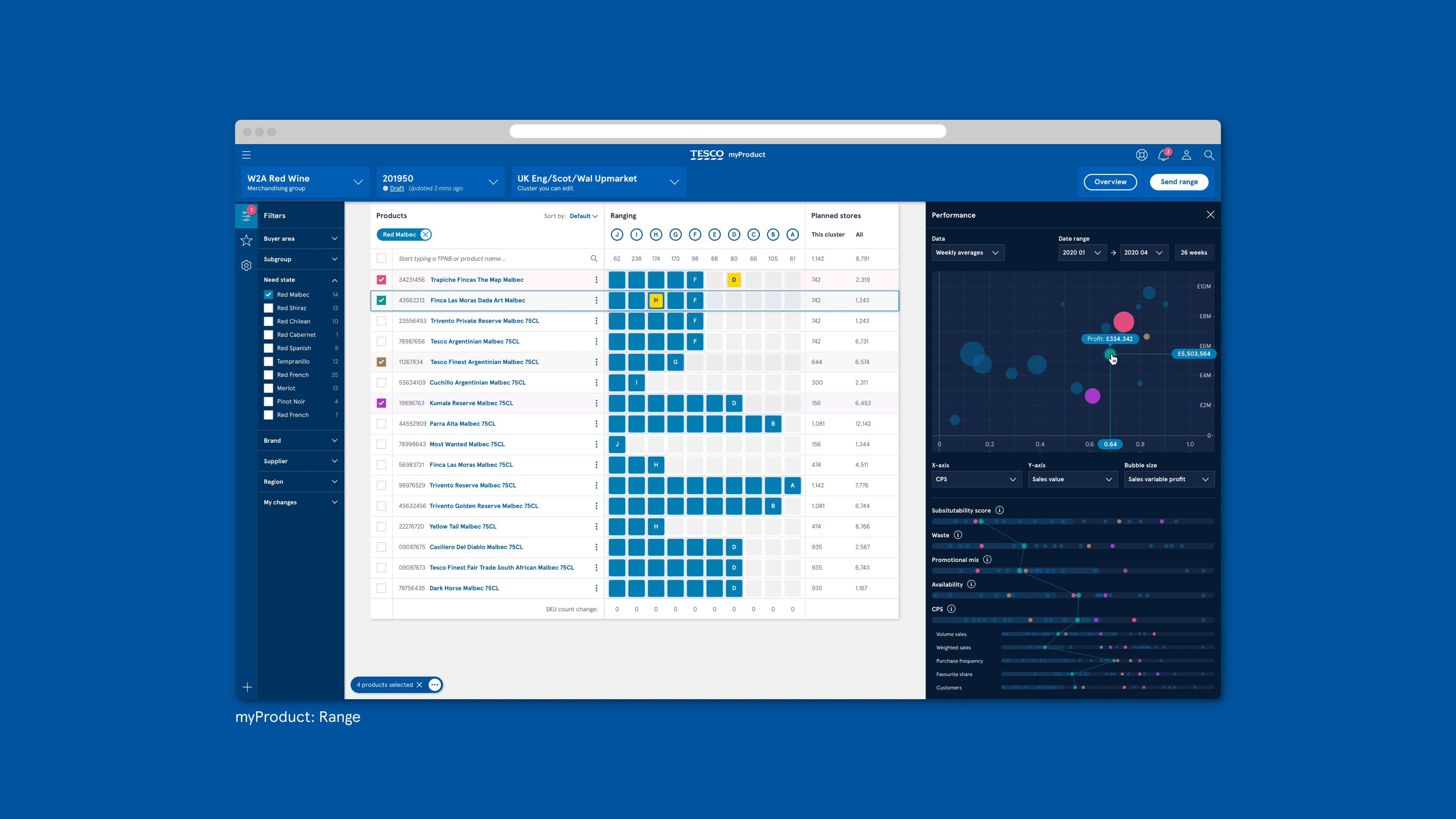
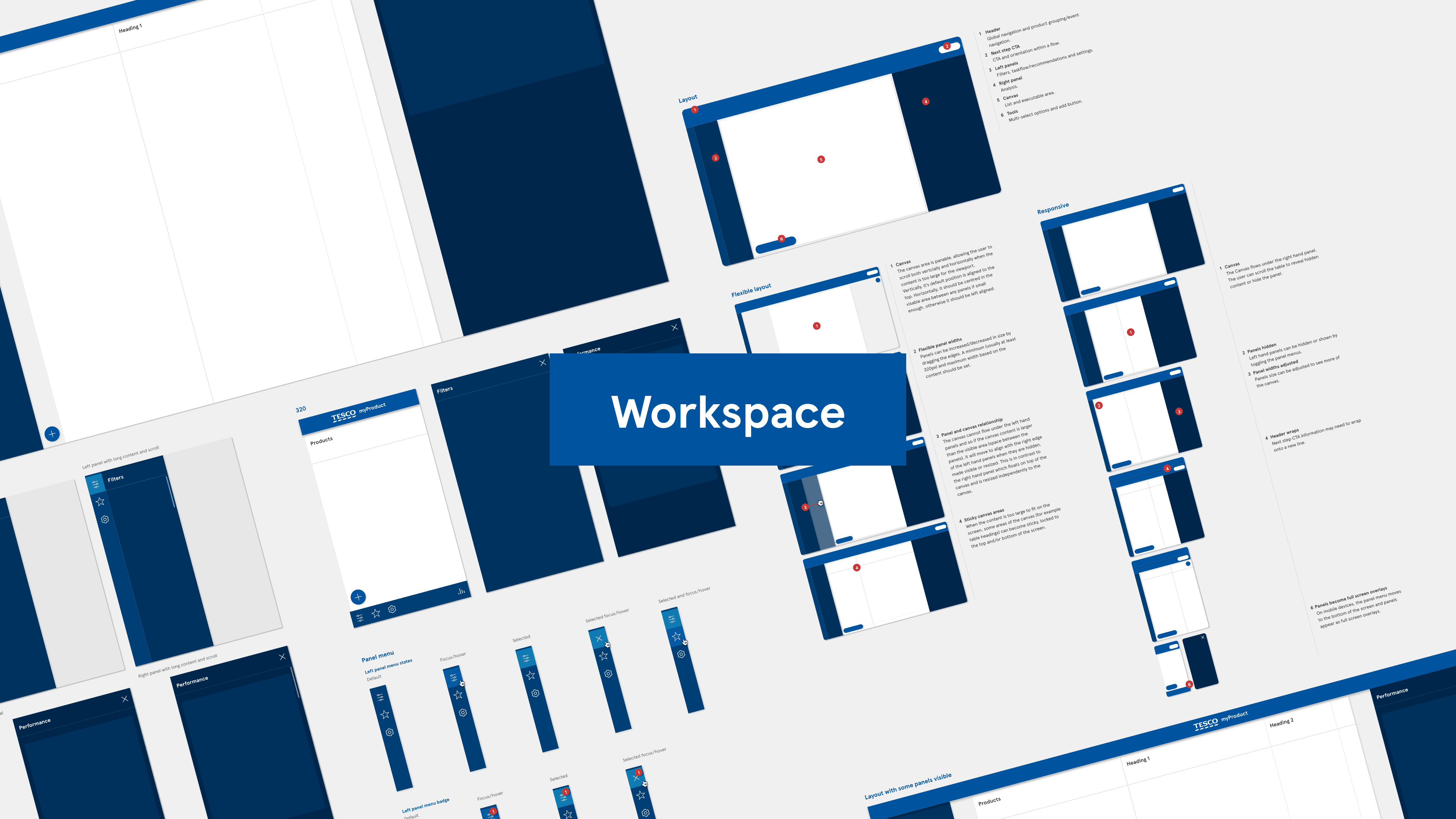
The change in approach allowed for denser web-application interfaces, allowing users to see more data, and new templates like the workspace, dashboards and timelines.



•
Early sketches showing the different interfaces we knew we needed
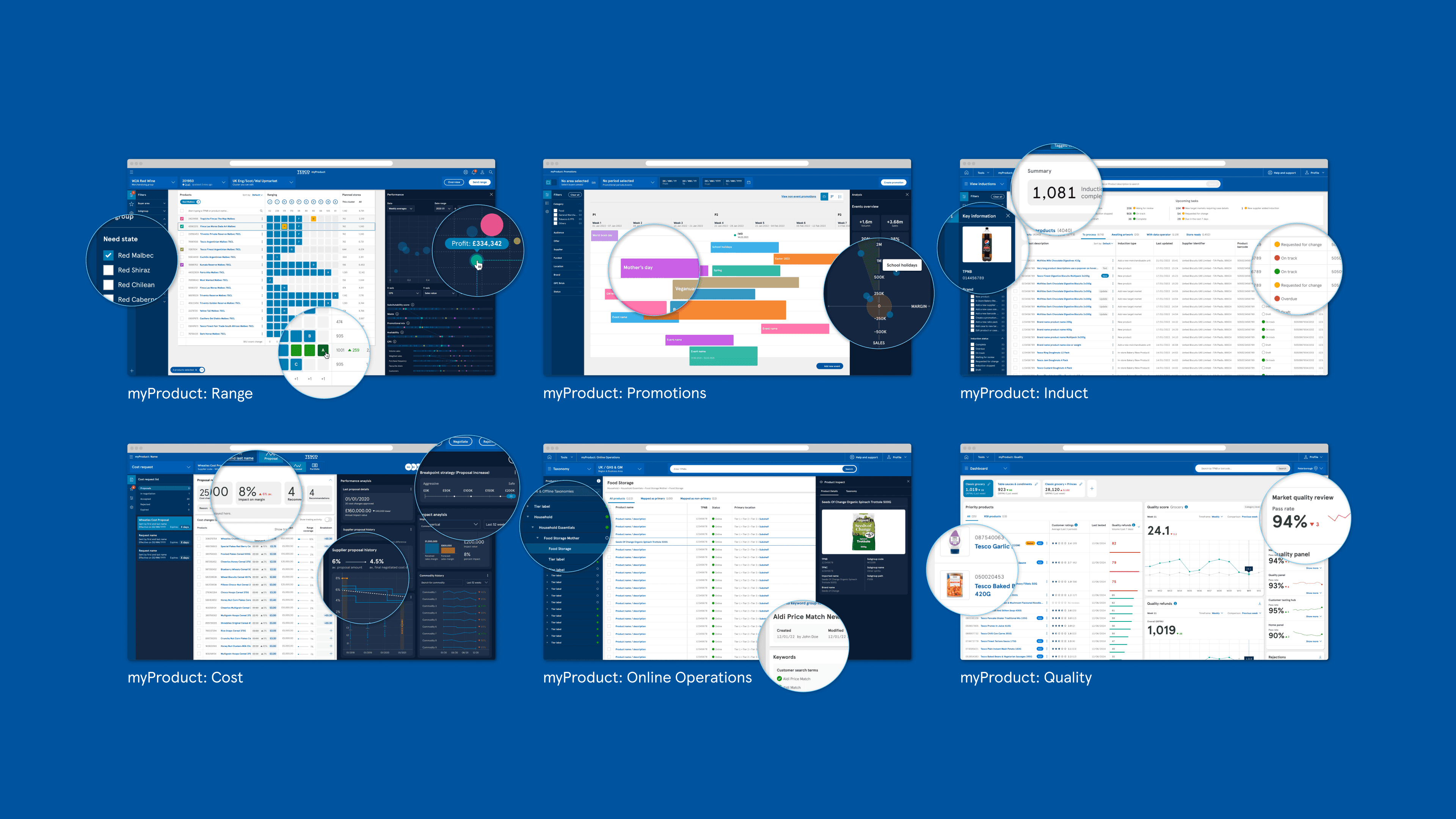
The change in approach allowed for denser web-application interfaces, allowing users to see more data, and new templates like the workspace, dashboards and timelines.


•
Examples of how the design system was rolled out to multiple applications


•
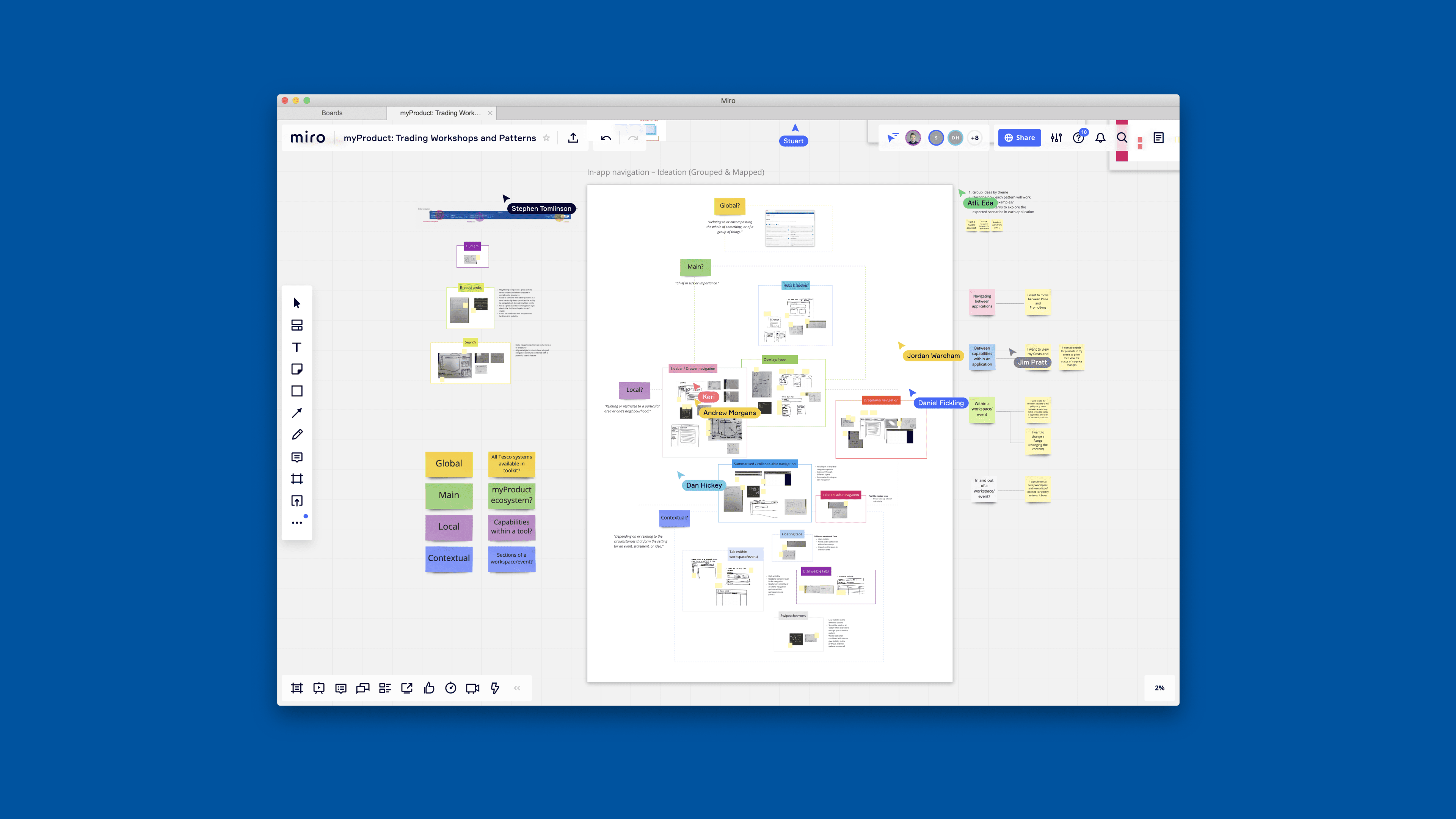
An example of the various online workshops where we developed new patterns and components, gathering different requirements across multiple products
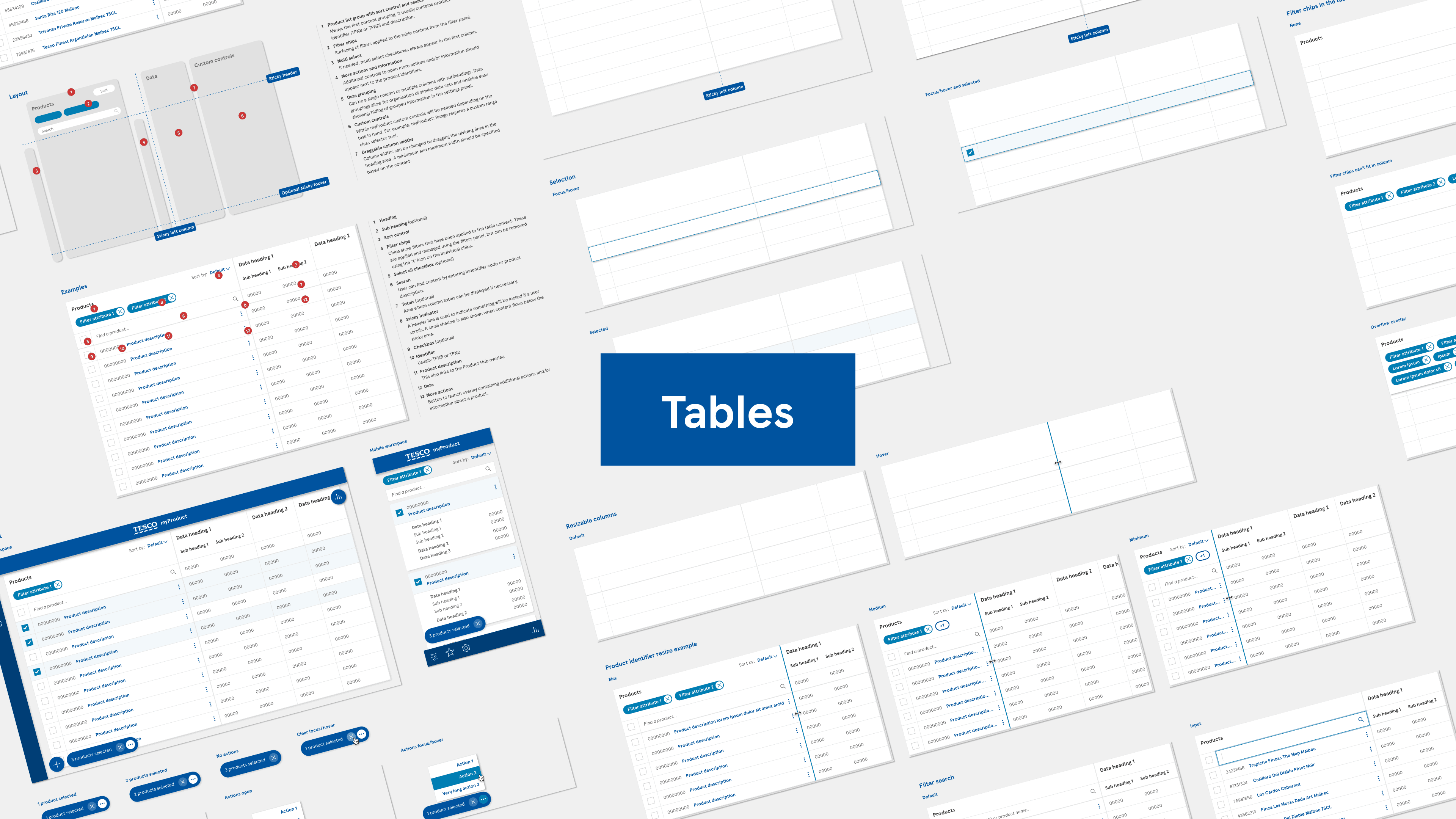
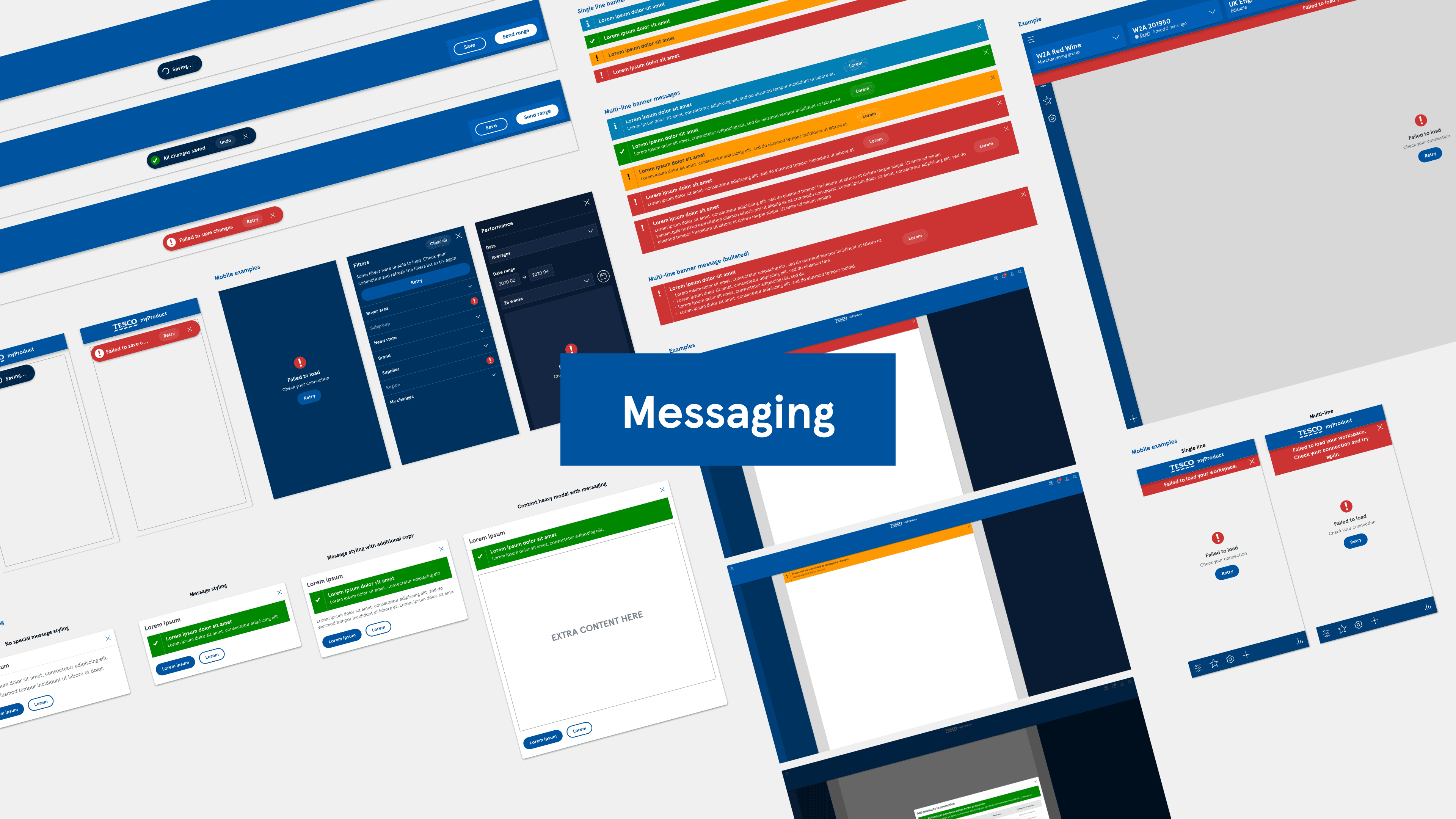
The design system has continued to evolve. A key part of my role was spotting opportunities for collaboration and bringing different teams together to develop new shared patterns to continue to strive for a consistent user experience. I worked on documentation, created a contribution model and governance structure as well as running twice-weekly sessions for designers to share problems, ideas, get feedback and discuss shared patterns and components.


•
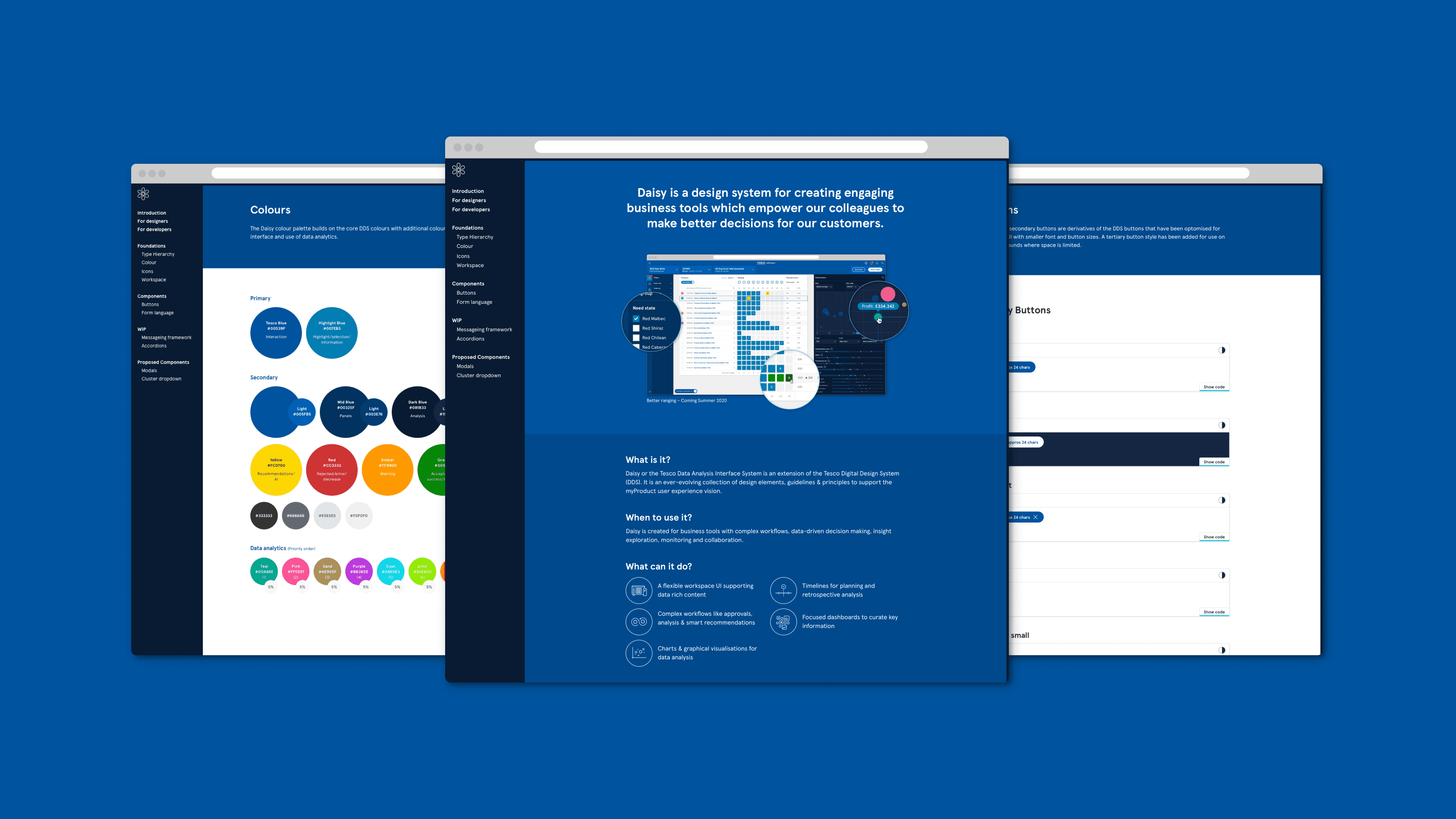
Storybook - Single source of truth for the design system with both design and React elements in one place


•
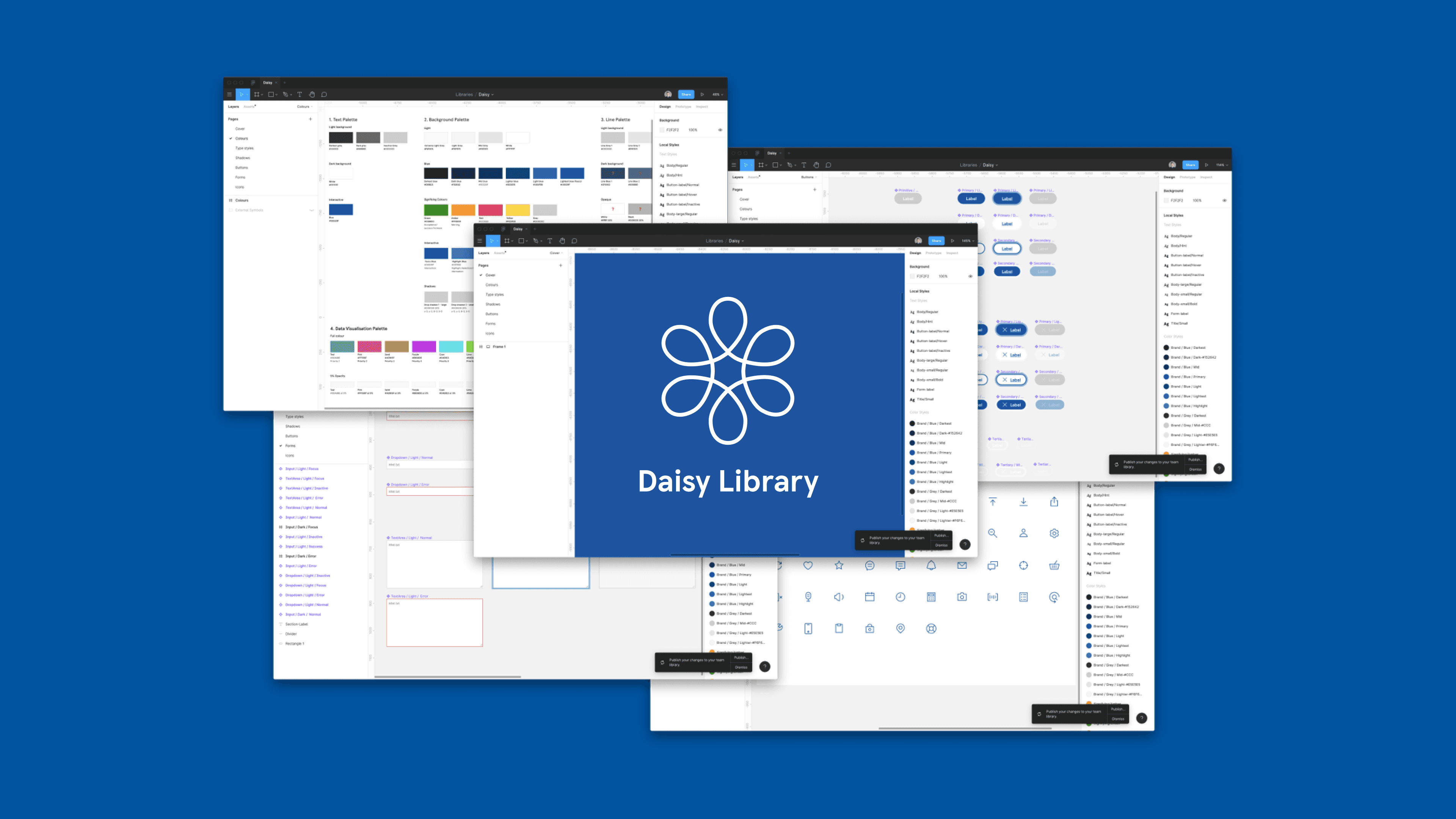
Figma library


The design system has been a great success with 398 components used across 48 products teams. From a Figma point of view, we were averaging around 50,000 component insertions every week. The design system and design team have designed and built a set of applications delivering hundreds of millions of pounds’ worth of value, either through savings or profit, for the business each year.
Towards the end of my time at Tesco, I also worked with the customer design system team to explore opportunities to align and unify both systems.
The design system has been a great success with 398 components used across 48 products teams. From a Figma point of view, we were averaging around 50,000 component insertions every week. The design system and design team have designed and built a set of applications delivering hundreds of millions of pounds’ worth of value, either through savings or profit, for the business each year.
Towards the end of my time at Tesco, I also worked with the customer design system team to explore opportunities to align and unify both systems.
The design system has been a great success with 398 components used across 48 products teams. From a Figma point of view, we were averaging around 50,000 component insertions every week. The design system and design team have designed and built a set of applications delivering hundreds of millions of pounds’ worth of value, either through savings or profit, for the business each year.
Towards the end of my time at Tesco, I also worked with the customer design system team to explore opportunities to align and unify both systems.