Tesco Quality
Creative direction
Product design
Data visualisation
Design for AI
Using AI and data visualisation to improve customer perception.
As part of my work with Tesco, from 2023 to 2025, I was also lead product designer on an enterprise aplication for monitoring and testing the quality of products sold at Tesco.
Working closely with product and engineering, I played a key role in evolving the web application from a simple tool for reviewing product standards and entering test data, into a central hub of quality data where Tesco colleagues and suppliers can gain valuable insights into product performance and underlying trends.
Improving quality while maintaining strong price competitiveness is a key business objective for Tesco. We know that increasing the customer quality perception by just 1%, can equate to around £23.8m a week, or £1.2bn a year, in extra in sales, so allowing technical teams, product developers and assessors to target the right products to monitor and improve is really important.
In 2024, the application prevented over £900,000 in potential refunds through the rejection of around 750,000 poor quality products in depots.
As part of my work with Tesco, from 2023 to 2025, I was also lead product designer on an enterprise aplication for monitoring and testing the quality of products sold at Tesco.
Working closely with product and engineering, I played a key role in evolving the web application from a simple tool for reviewing product standards and entering test data, into a central hub of quality data where Tesco colleagues and suppliers can gain valuable insights into product performance and underlying trends.
Improving quality while maintaining strong price competitiveness is a key business objective for Tesco. We know that increasing the customer quality perception by just 1%, can equate to around £23.8m a week, or £1.2bn a year, in extra in sales, so allowing technical teams, product developers and assessors to target the right products to monitor and improve is really important.
In 2024, the application prevented over £900,000 in potential refunds through the rejection of around 750,000 poor quality products in depots.
As part of my work with Tesco, from 2023 to 2025, I was also lead product designer on an enterprise aplication for monitoring and testing the quality of products sold at Tesco.
Working closely with product and engineering, I played a key role in evolving the web application from a simple tool for reviewing product standards and entering test data, into a central hub of quality data where Tesco colleagues and suppliers can gain valuable insights into product performance and underlying trends.
Improving quality while maintaining strong price competitiveness is a key business objective for Tesco. We know that increasing the customer quality perception by just 1%, can equate to around £23.8m a week, or £1.2bn a year, in extra in sales, so allowing technical teams, product developers and assessors to target the right products to monitor and improve is really important.
In 2024, the application prevented over £900,000 in potential refunds through the rejection of around 750,000 poor quality products in depots.


•
myProduct: Quality
Dashboard
Dashboard
Dashboard
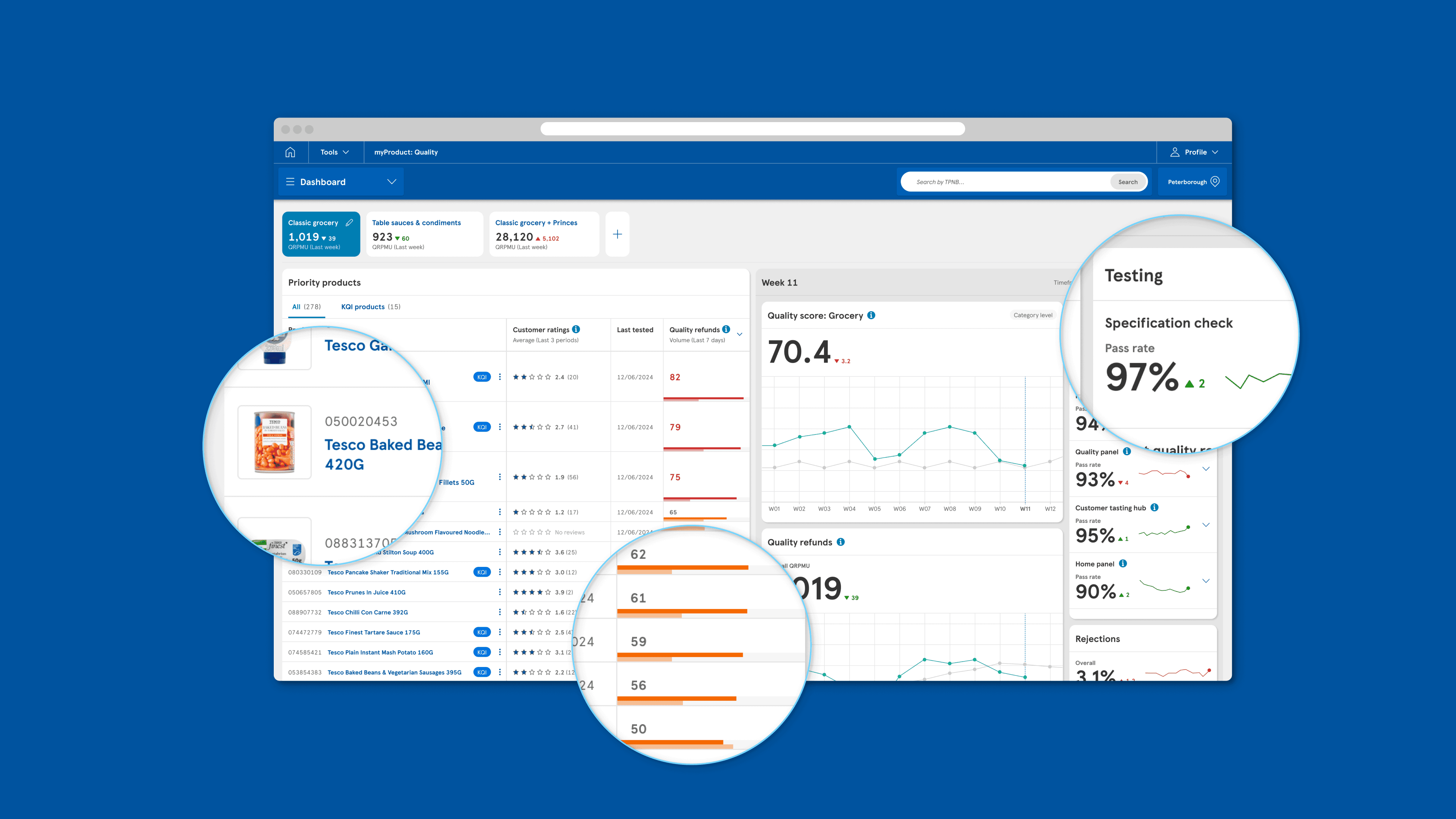
I introduced a dashboard to give both Tesco colleagues and suppliers a comprehensive overview of their products’ performance across multiple metrics, including test results, refunds, complaints, depot rejections, and customer reviews. Previously, colleagues could only search for individual product data, and suppliers had to request this information manually – a process that could take up to two weeks.
During user interviews, I discovered that some technical managers were responsible for products across entirely different categories, and so I created functionality that allowed users to create saved ‘views’ of the dashbaord. This enabled them to quickly switch between different product groups without repeatedly adjusting filters or navigating the buyer hierarchy.
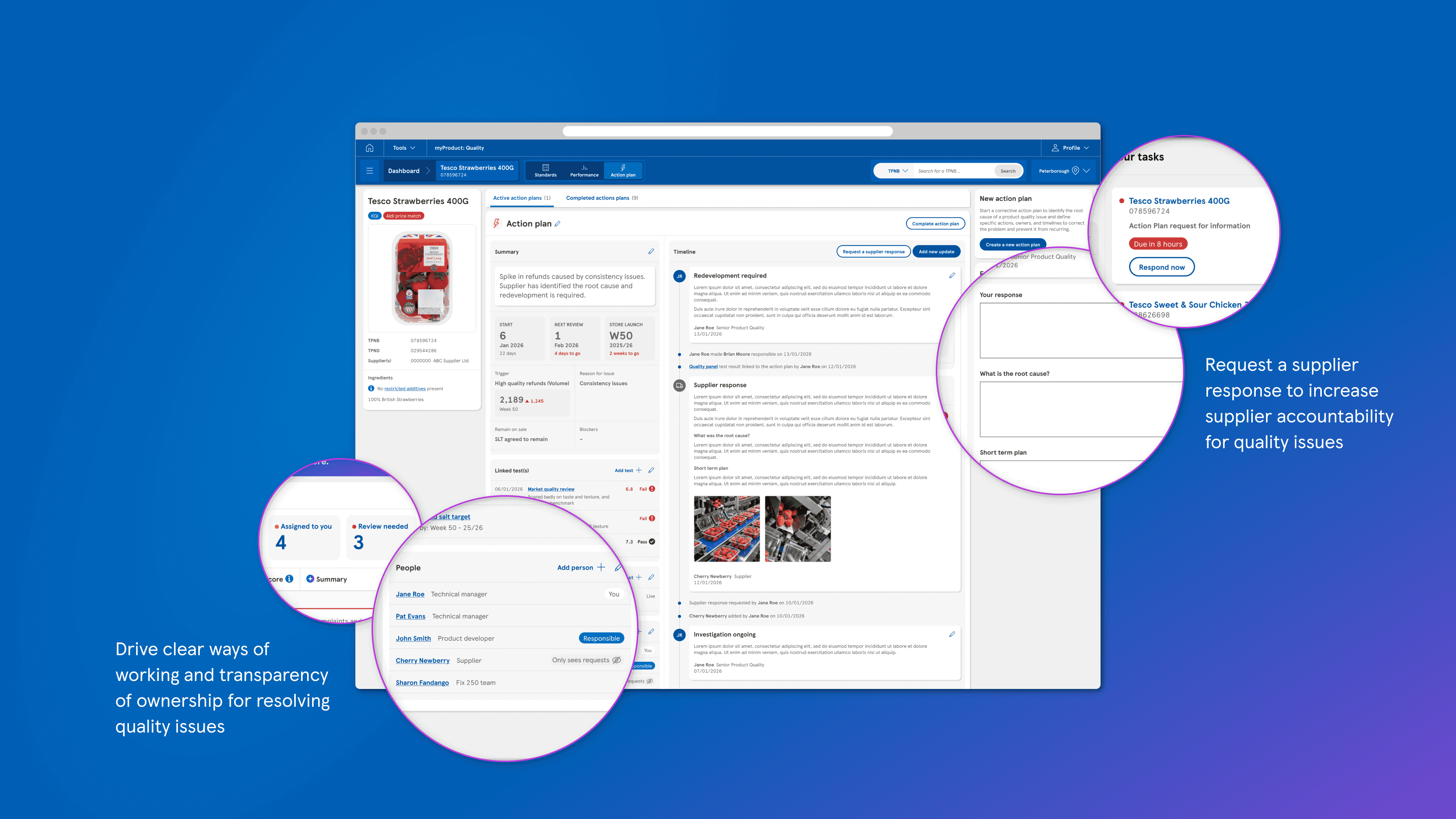
We are continuing to develop the dashboard with more metrics planned. We’re also implementing action plans to track and measure the response to products that fail quality tests, ensuring continuous improvement in product standards.
In the couple of months since launching the new dashboard, weekly visits by technical teams had tripled and we’d onboarded 850 suppliers, ensuring they have the latest information about their products.
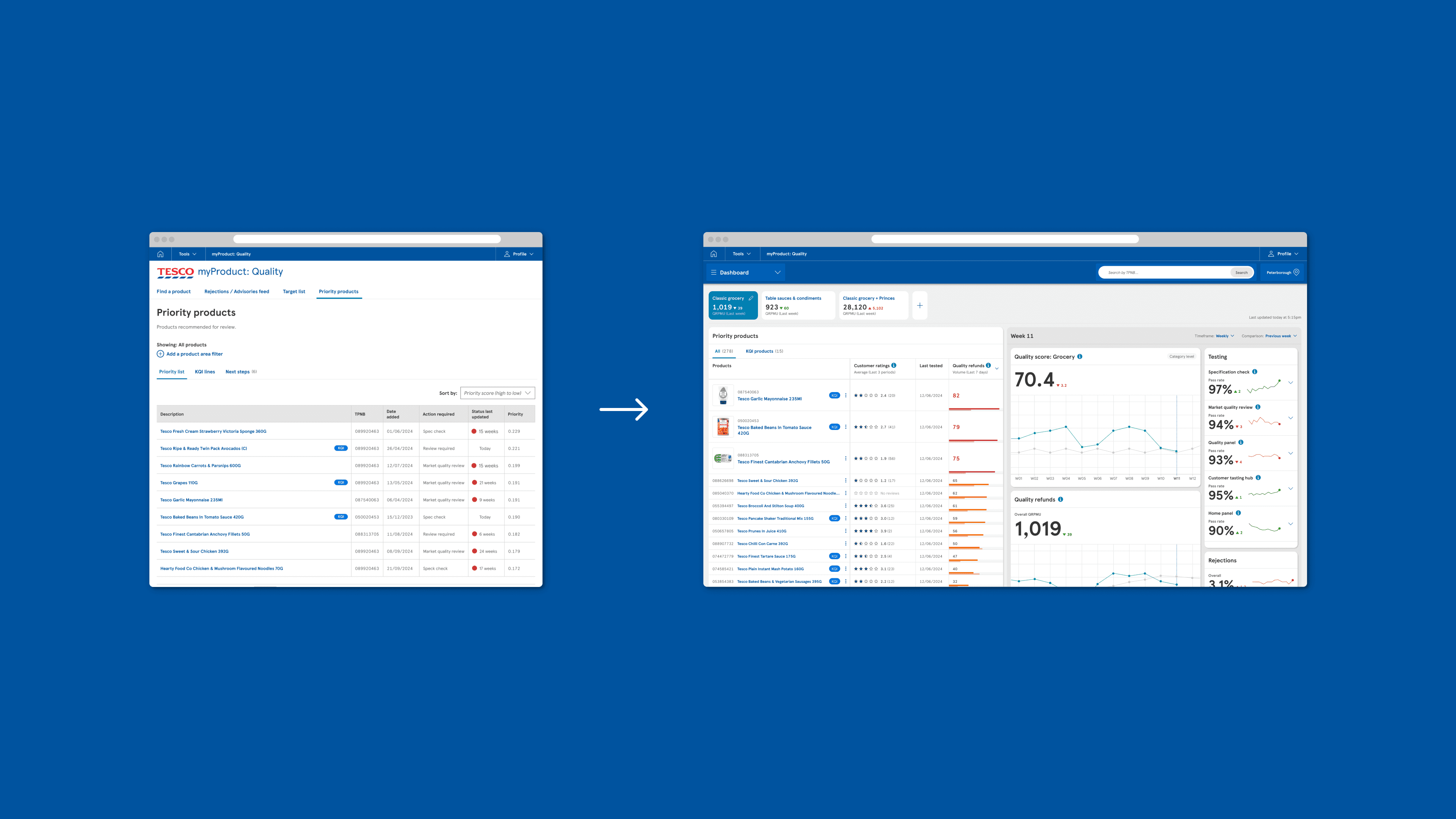
I introduced a dashboard to give both Tesco colleagues and suppliers a comprehensive overview of their products’ performance across multiple metrics, including test results, refunds, complaints, depot rejections, and customer reviews. Previously, colleagues could only search for individual product data, and suppliers had to request this information manually – a process that could take up to two weeks.
During user interviews, I discovered that some technical managers were responsible for products across entirely different categories, and so I created functionality that allowed users to create saved ‘views’ of the dashbaord. This enabled them to quickly switch between different product groups without repeatedly adjusting filters or navigating the buyer hierarchy.
We are continuing to develop the dashboard with more metrics planned. We’re also implementing action plans to track and measure the response to products that fail quality tests, ensuring continuous improvement in product standards.
In the couple of months since launching the new dashboard, weekly visits by technical teams had tripled and we’d onboarded 850 suppliers, ensuring they have the latest information about their products.
I introduced a dashboard to give both Tesco colleagues and suppliers a comprehensive overview of their products’ performance across multiple metrics, including test results, refunds, complaints, depot rejections, and customer reviews. Previously, colleagues could only search for individual product data, and suppliers had to request this information manually – a process that could take up to two weeks.
During user interviews, I discovered that some technical managers were responsible for products across entirely different categories, and so I created functionality that allowed users to create saved ‘views’ of the dashbaord. This enabled them to quickly switch between different product groups without repeatedly adjusting filters or navigating the buyer hierarchy.
We are continuing to develop the dashboard with more metrics planned. We’re also implementing action plans to track and measure the response to products that fail quality tests, ensuring continuous improvement in product standards.
In the couple of months since launching the new dashboard, weekly visits by technical teams had tripled and we’d onboarded 850 suppliers, ensuring they have the latest information about their products.


•
The transformation from a simple transactional tool into a central hub of quality data and insights
Test results
Test results
Test results
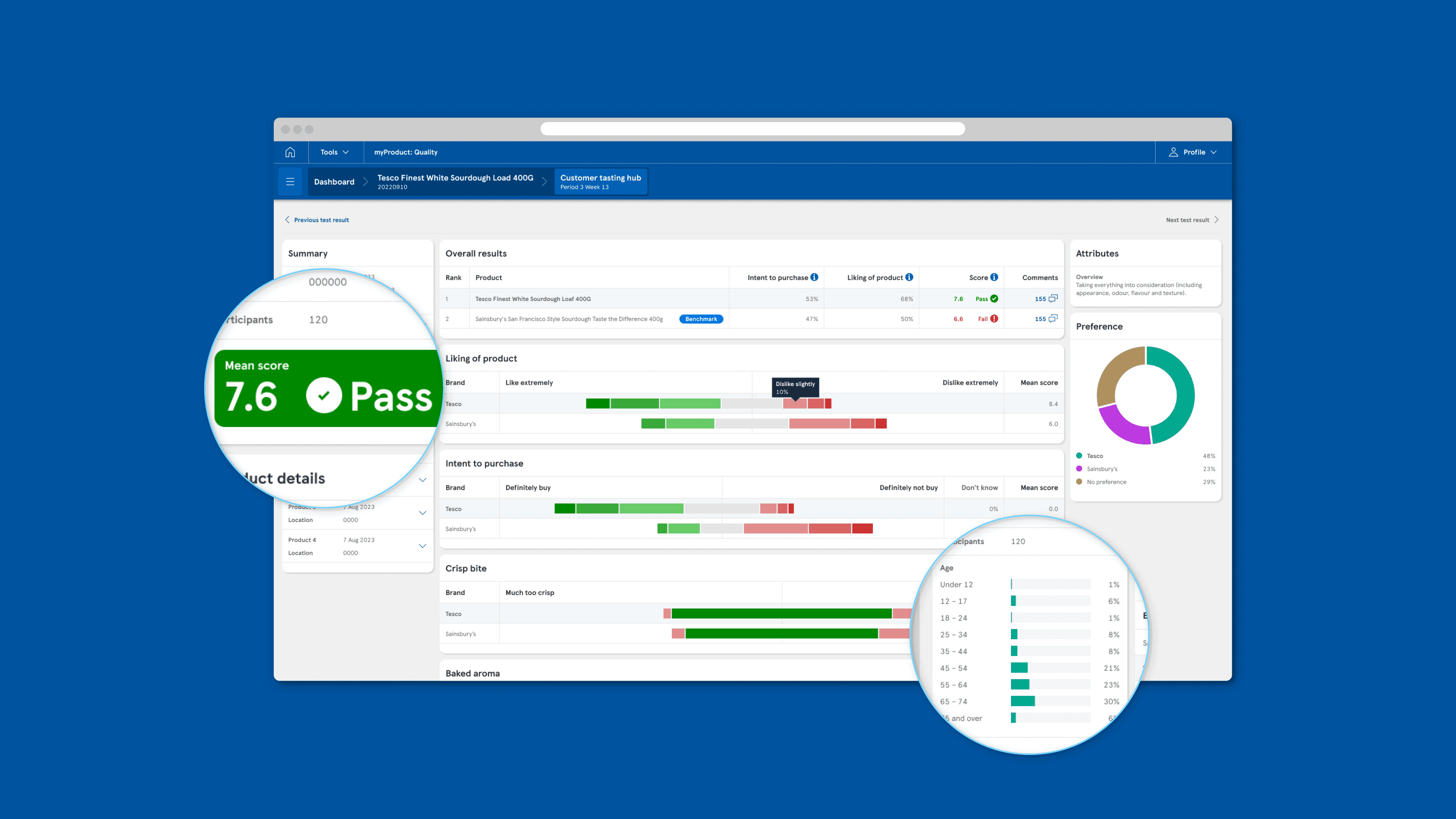
Test results were previously sent out in an email to technical teams with no formatting or context. When we were able to bring this data into the application, I worked with users to make sure it was presented in a way that was easier to understand and act upon by using data visualisation.


•
An example of the improvements made to test results pages
Emergency product withdrawals and recalls
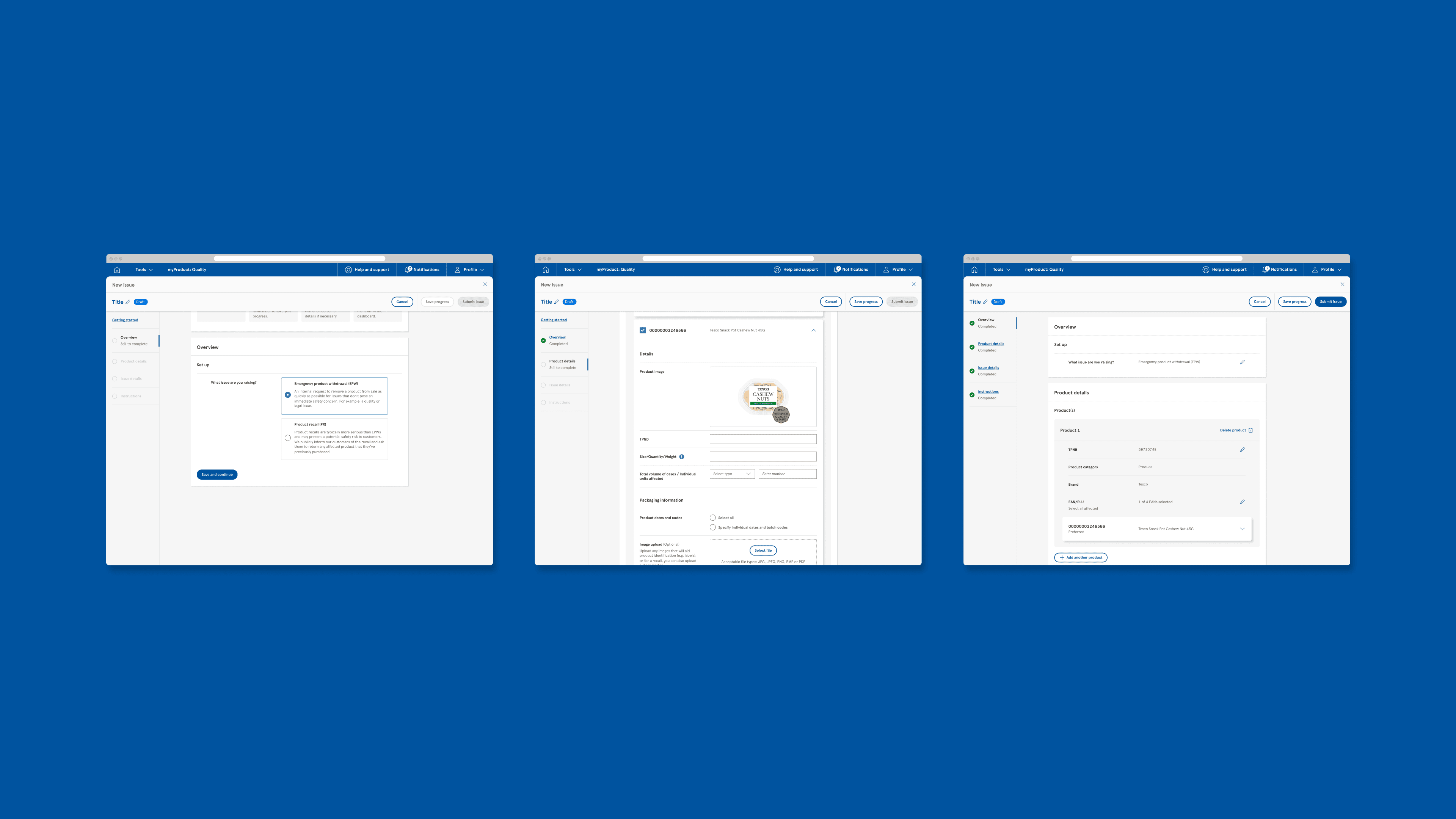
Working alongside a researcher, we transformed the process for reporting and managing emergency product withdrawals and recalls.
Previously an excel form was emailed back and forth between suppliers, the technical teams and the team responsible for withdrawing the products. This had a rejection rate of 70% as incomplete or incorrect information was entered. We have reduced this to 29% by moving the form online with a more intuitive interface with contextual help and tailored questions based on the products selected.
We were able to reduce the time it takes to block a product from sale from around 48 hours to just 2. This means potentially dangerous products with an significant risk to reputational damage can be removed from stores and blocked from sale faster. The process also works the other way around and by speeding up the unblocking of a product when it is given the all clear, has meant Tesco have gained a potential £120,000 in sales in the first 5 months since launch.
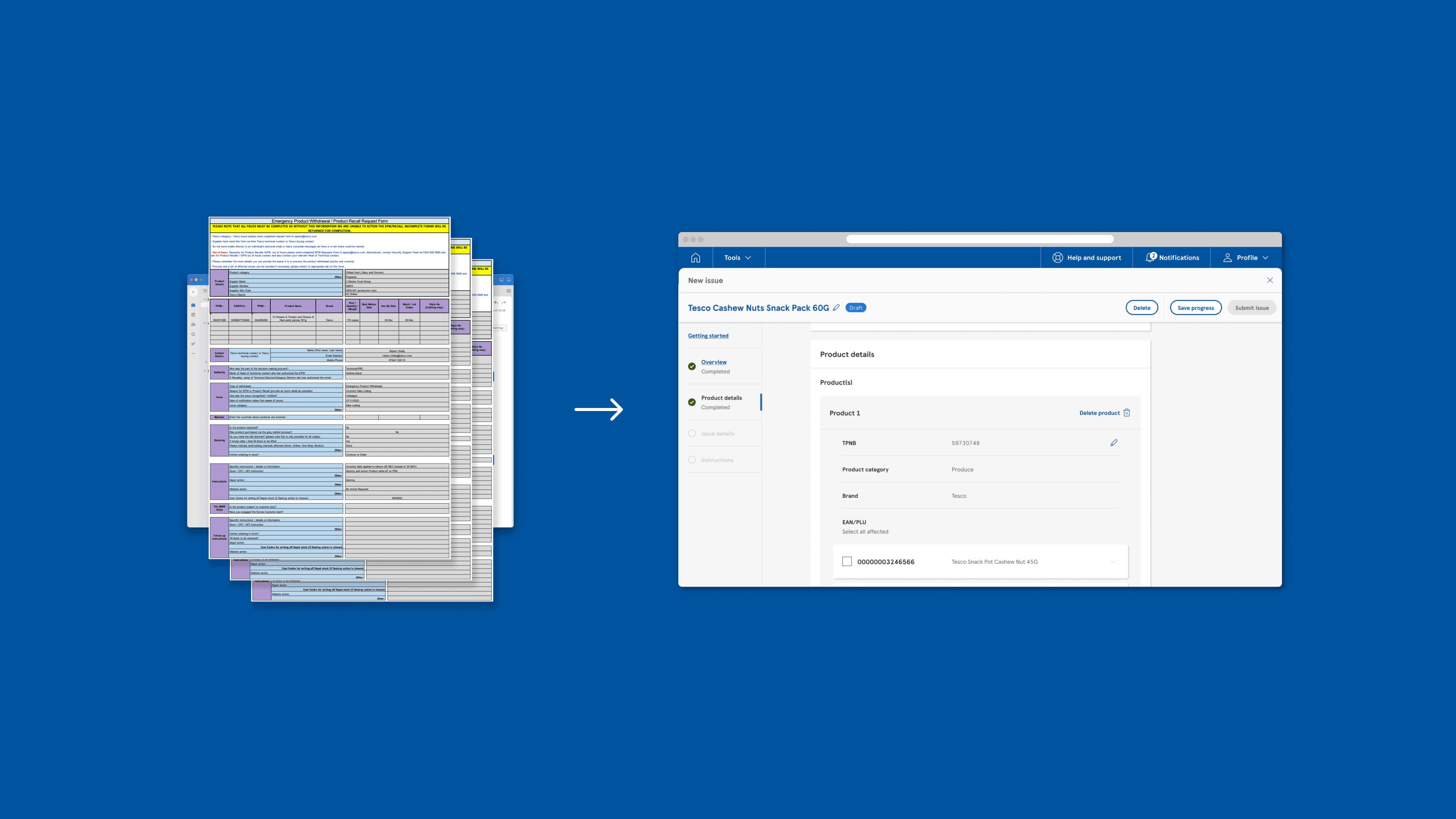
Working alongside a researcher, we transformed the process for reporting and managing emergency product withdrawals and recalls.
Previously an excel form was emailed back and forth between suppliers, the technical teams and the team responsible for withdrawing the products. This had a rejection rate of 70% as incomplete or incorrect information was entered. We have reduced this to 29% by moving the form online with a more intuitive interface with contextual help and tailored questions based on the products selected.
We were able to reduce the time it takes to block a product from sale from around 48 hours to just 2. This means potentially dangerous products with an significant risk to reputational damage can be removed from stores and blocked from sale faster. The process also works the other way around and by speeding up the unblocking of a product when it is given the all clear, has meant Tesco have gained a potential £120,000 in sales in the first 5 months since launch.
Working alongside a researcher, we transformed the process for reporting and managing emergency product withdrawals and recalls.
Previously an excel form was emailed back and forth between suppliers, the technical teams and the team responsible for withdrawing the products. This had a rejection rate of 70% as incomplete or incorrect information was entered. We have reduced this to 29% by moving the form online with a more intuitive interface with contextual help and tailored questions based on the products selected.
We were able to reduce the time it takes to block a product from sale from around 48 hours to just 2. This means potentially dangerous products with an significant risk to reputational damage can be removed from stores and blocked from sale faster. The process also works the other way around and by speeding up the unblocking of a product when it is given the all clear, has meant Tesco have gained a potential £120,000 in sales in the first 5 months since launch.


•
From Excel files to simple form UI


•
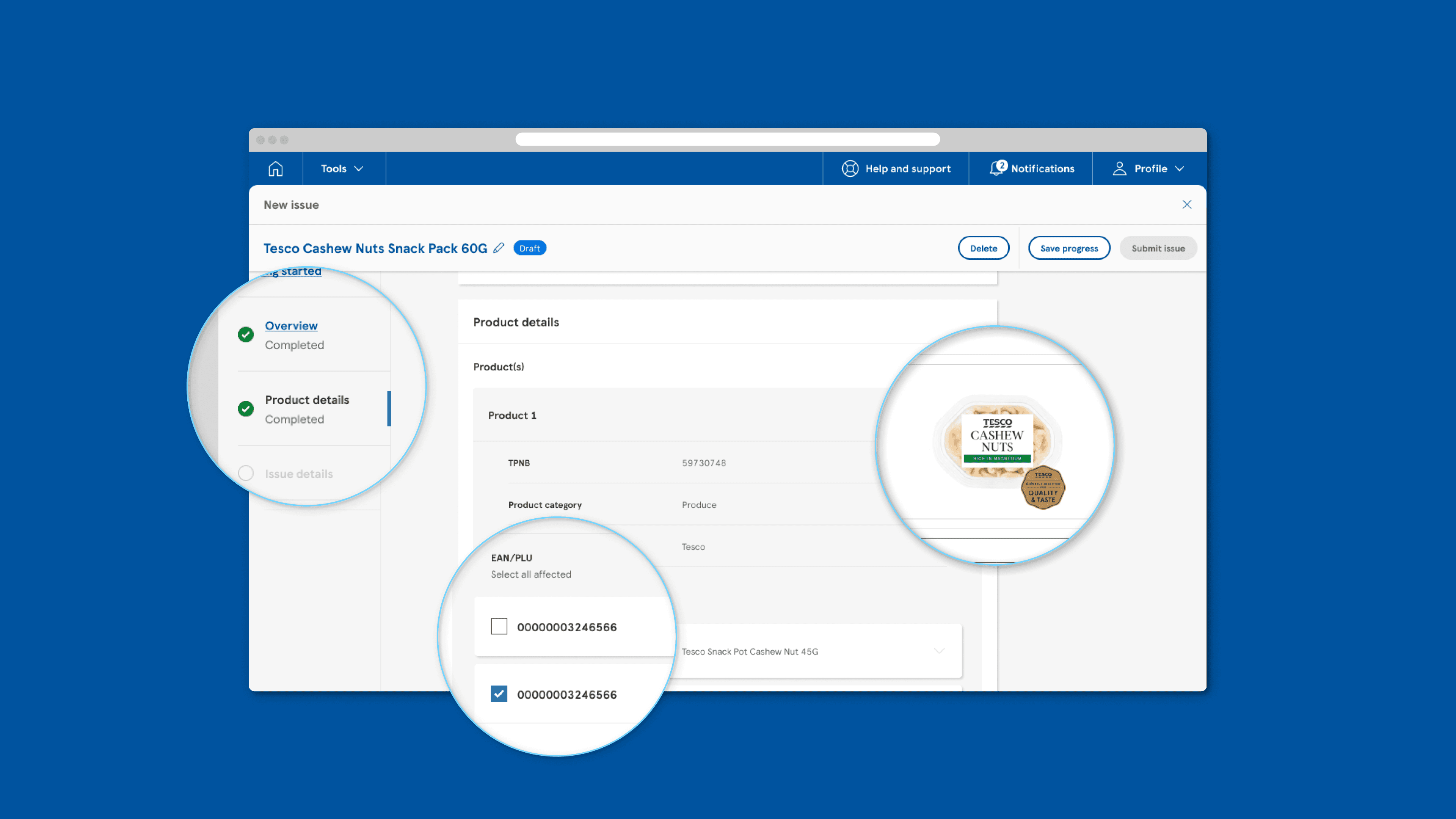
Emergency product withdrawal form


•
More screens


•
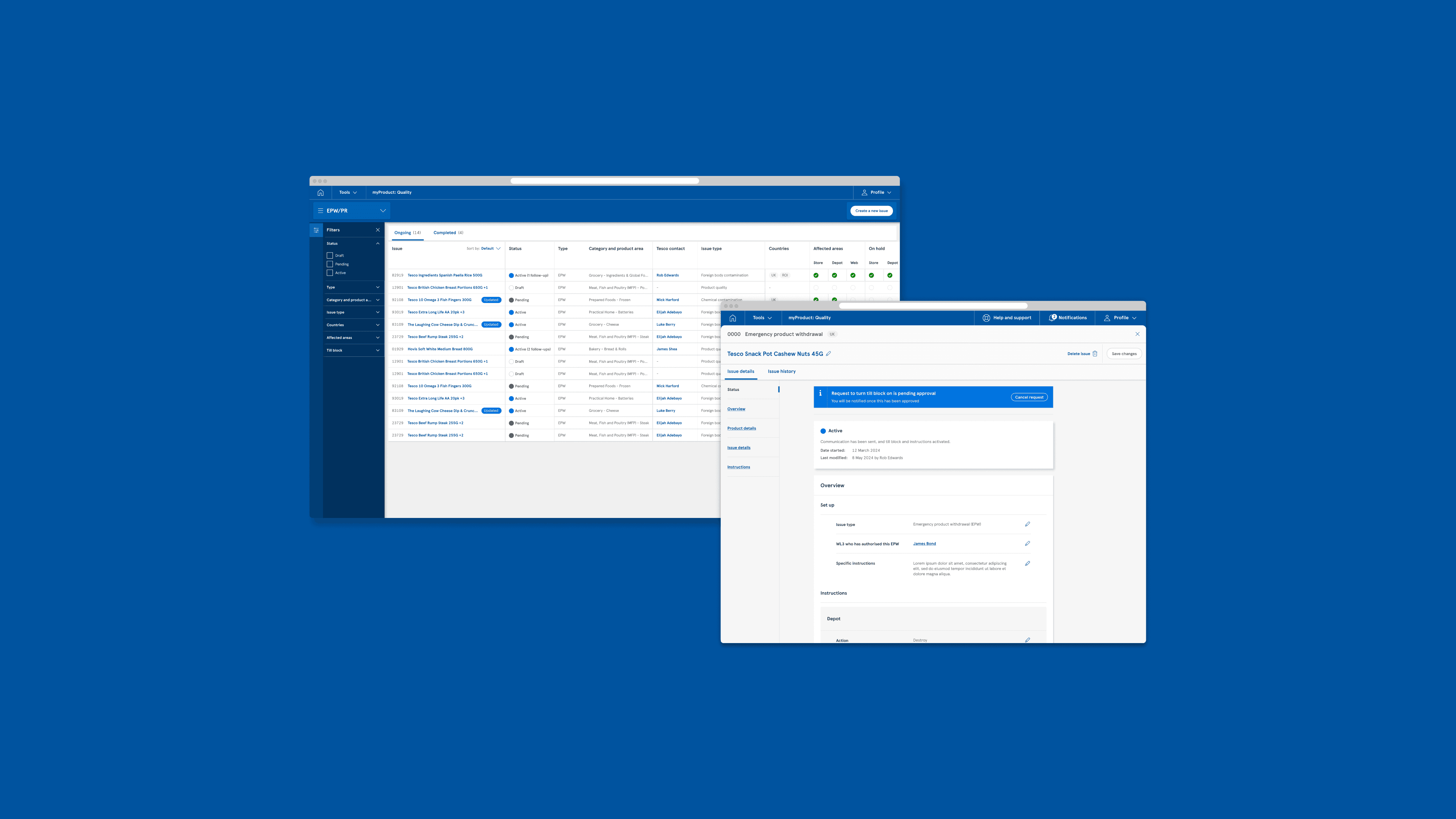
Admin screens allowing the team within Tesco to monitor, amend and approve issues
Future releases
Future releases
Future releases
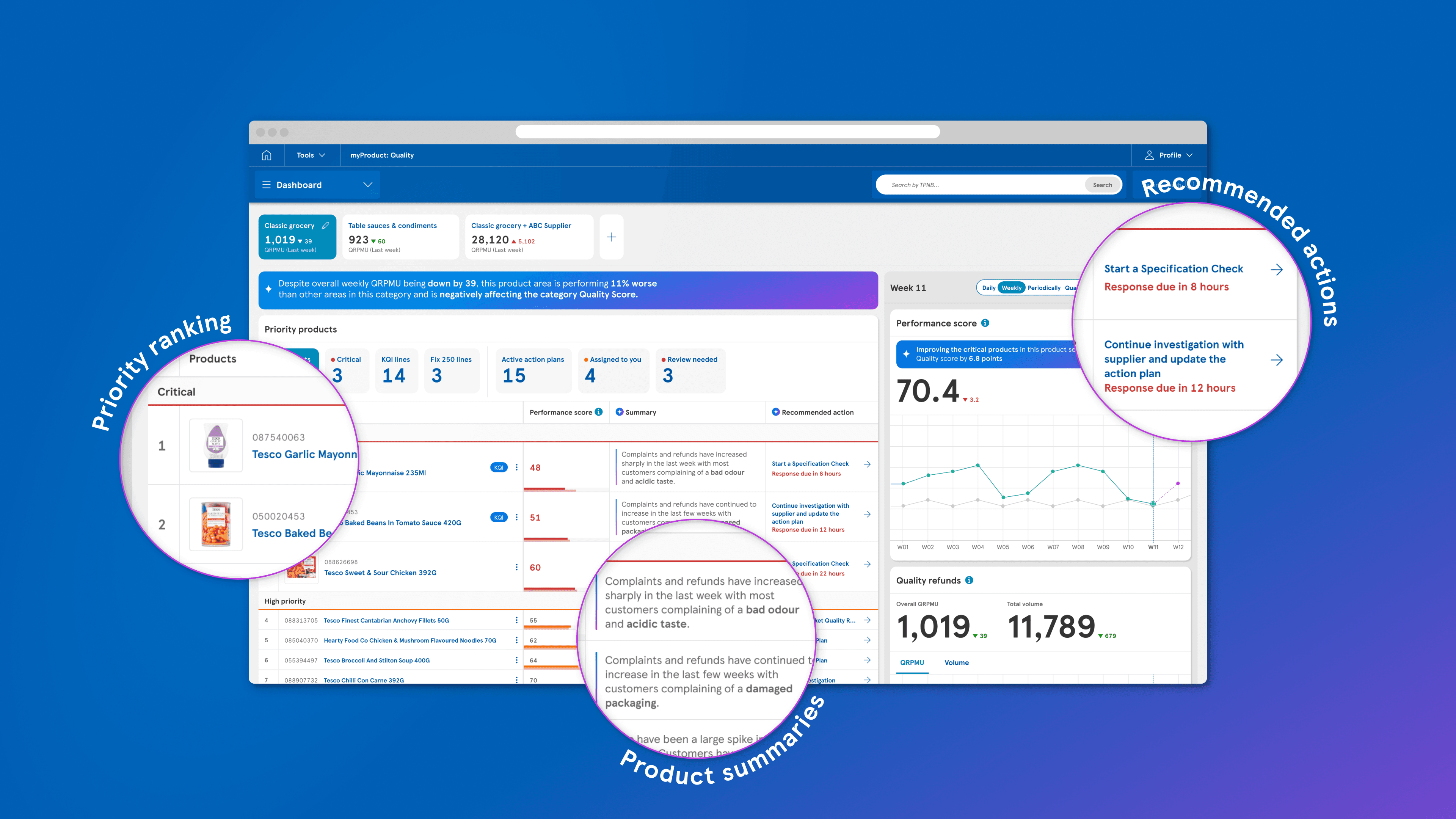
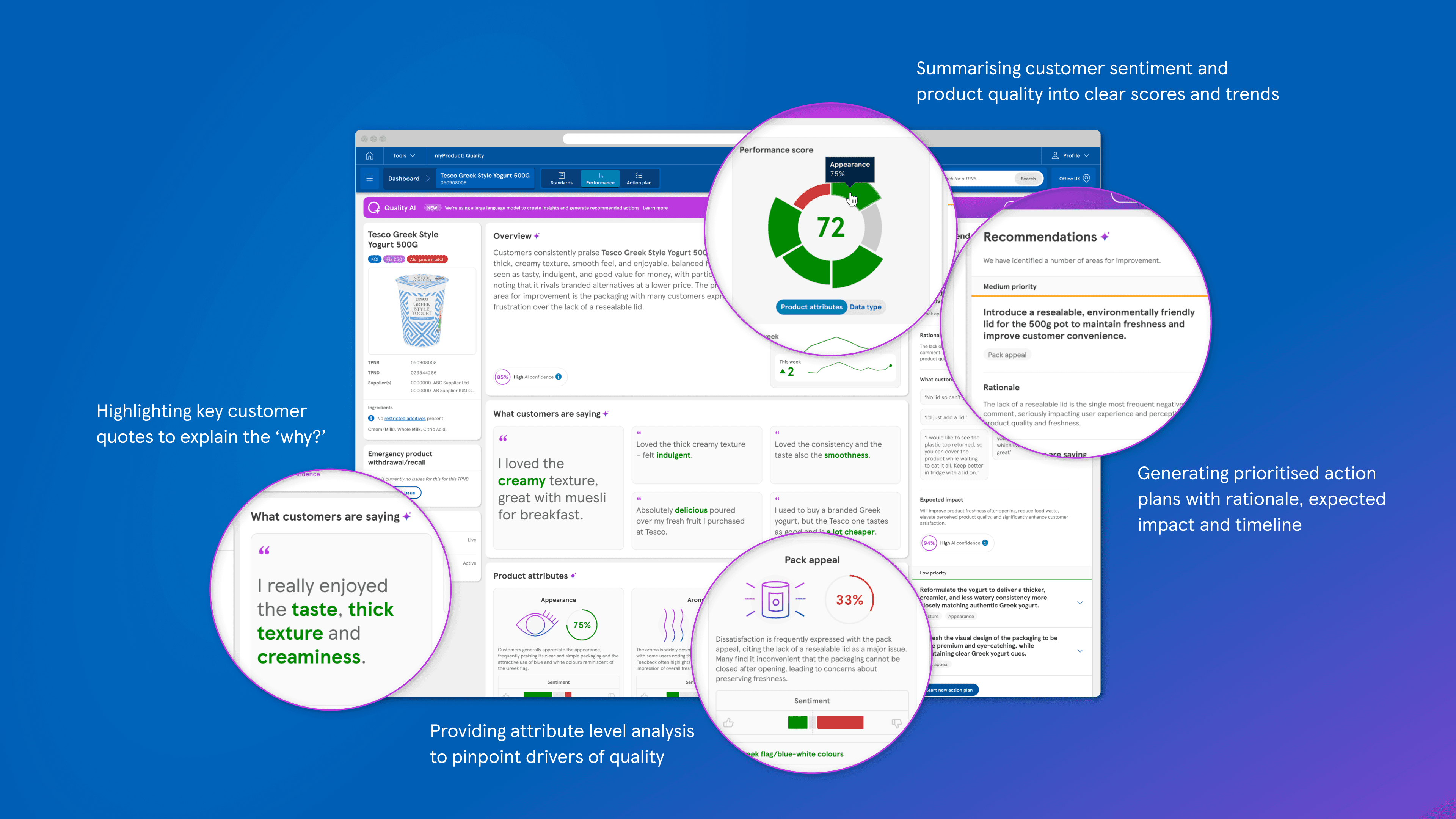
I have continued to evolve the product and future updates include better prioritisation of products and using AI to summarise data and create actionable insights, including the generation of corrective action plans.